Private Platform to Connect You With Lawyer
Whether someone's cheque to you has bounced or you have received a cheque bounce notice, we connect you with an independent, experienced advocate for counselling on your Section 138 matter. Share your details and documents, and we'll organise your case and put you in touch with a lawyer who can advise you on the next step.
Why Talk to a Lawyer Early?
Section 138 of the Negotiable Instruments Act, 1881 has strict conditions and time limits. The right course depends on the cheque, the return memo, the underlying debt or liability, how notice was served, the parties involved and the jurisdiction — which is why advice from a lawyer on your exact facts matters.
Whether you are the payee seeking your money back or the drawer who has received a notice, a lawyer can help you understand your position and options. Missing a statutory date can affect the remedies available, so it is best to seek counselling promptly.
During counselling, the advocate can guide you on:
- Whether the cheque and return memo support a Section 138 case
- The strength of the underlying debt, loan, invoice or agreement
- Sending a legal demand notice, or replying to one received
- Filing a complaint, defending a case, or settling the matter
- Limitation dates and which court has jurisdiction
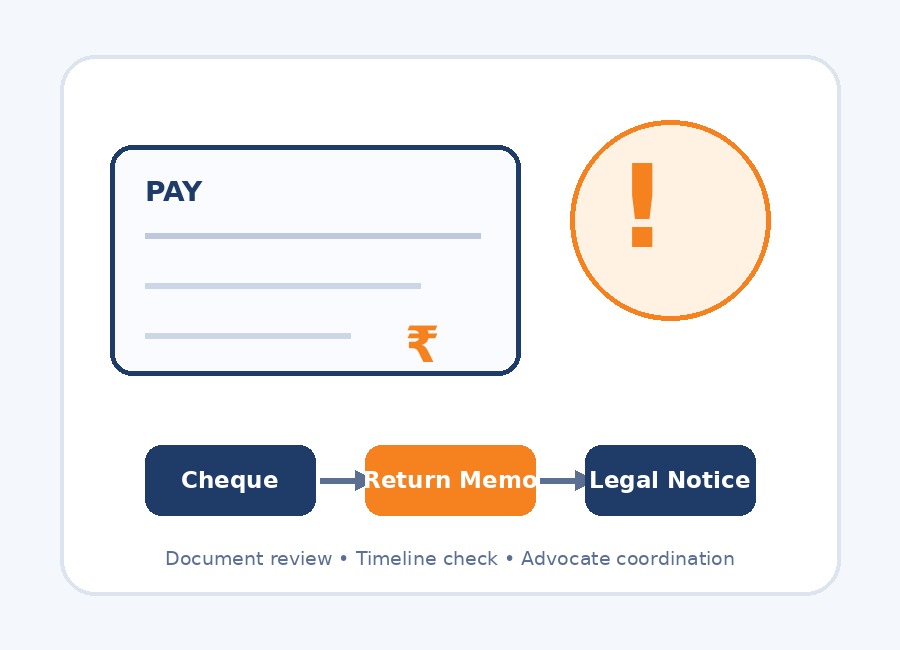
Get Connected with a Lawyer For
Legal Notice
Talk to a lawyer about sending a cheque bounce demand notice, or replying to one you have received.
Filing a Complaint
Get advice from a lawyer on whether and when to file a Section 138 complaint, and what is needed.
Defending a Case
If you are the drawer or accused, get counselling on your defence, court appearance and bail.
Settlement
Get guidance from a lawyer on negotiation, mediation or compounding to settle the matter.
Key Timeline Checkpoints
A general overview of the statutory timeline — your lawyer will confirm the exact dates for your case.
The cheque must be presented within its validity period.
Keep the return memo and note the date you learnt of the dishonour.
Generally required within 30 days of receiving the bank's information.
The drawer gets 15 days after receipt; complaint timing is then governed by Section 142.